Introduction
The invention of the printing press is one of the greatest milestones in human history. It transformed the way knowledge, education, religion, science, and business spread across the world. From the first movable-type printing press invented by Johannes Gutenberg in the 15th century to today’s AI-powered digital printing technology, the printing industry has continuously evolved.
In this article, we’ll explore the complete history of the printing press from 1440 to 2026 and discover how printing technology has shaped the modern world.
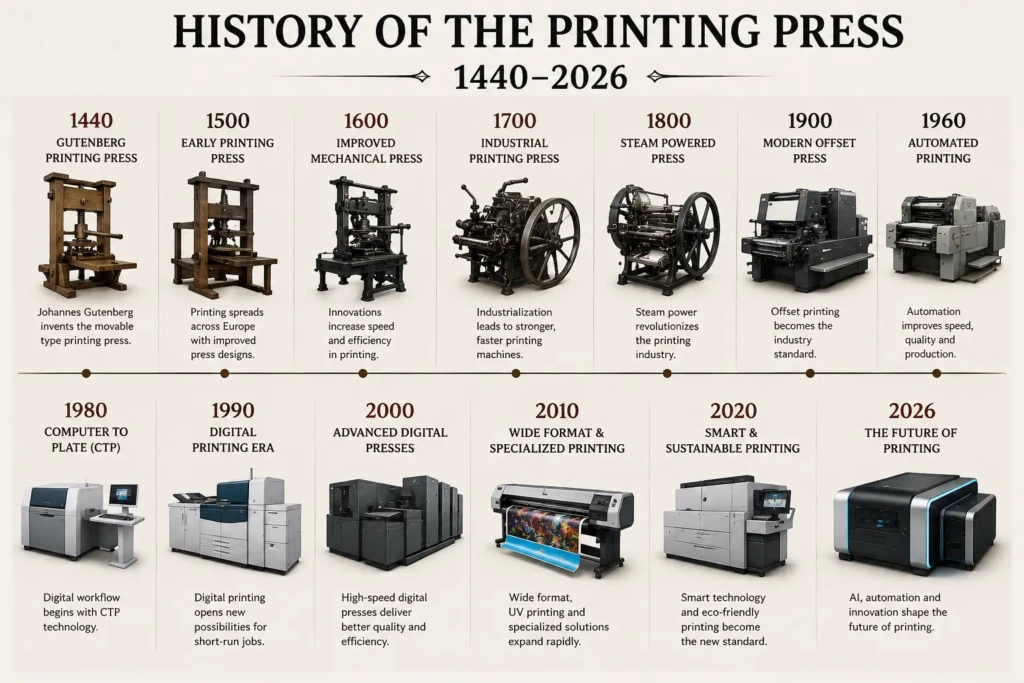
1440 – The Birth of the Printing Press
Around 1440, German inventor Johannes Gutenberg introduced the movable-type printing press. Before this invention, books were copied by hand, making them expensive and difficult to produce.
Gutenberg’s invention made it possible to print books much faster and at a lower cost, leading to a revolution in education and communication.
Major Achievement:
- First movable metal type printing press
- Faster book production
- Beginning of mass communication
1500–1700 – Printing Expands Across Europe
Following Gutenberg’s invention, printing presses spread rapidly throughout Europe. Thousands of books were printed, helping to increase literacy and making knowledge more accessible to people.
During this period, printing became essential for publishing books, newspapers, religious texts, and scientific discoveries.
1700–1800 – The Industrial Printing Revolution
The Industrial Revolution introduced major improvements to printing technology.
New mechanical presses increased production speed and allowed publishers to print thousands of pages every day. Newspapers became more affordable, and commercial printing expanded rapidly.
1800–1900 – Steam-Powered Printing
Steam-powered printing presses dramatically improved efficiency and productivity.
For the first time, publishers could print large newspapers, magazines, and books on a massive scale. Printing became a key driver of business growth and information sharing around the world.
1900–1980 – The Rise of Offset Printing
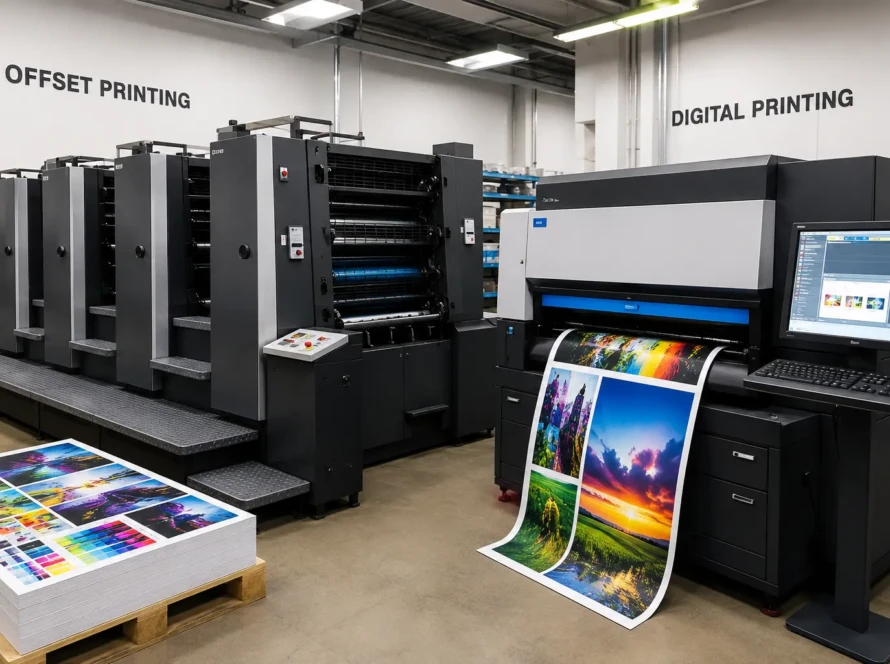
The 20th century marked the rise of offset printing, which quickly became the industry standard for commercial printing.
Offset printing delivers exceptional image quality, sharp text, accurate colors, and cost-effective production for large print runs.
Today, it is widely used for:
- Books
- Magazines
- Brochures
- Catalogs
- Packaging
- Corporate stationery
- Marketing materials
1980–2000 – Digital Technology Changes Printing
As computers became more common, the printing industry entered the digital era.
Desktop publishing software allowed designers to create professional layouts, while digital workflows reduced production time and improved accuracy.
Printing became faster, more flexible, and easier for businesses of all sizes.
2000–2020 – The Growth of Digital Printing
Digital printing revolutionized the industry by eliminating the need for printing plates.
Businesses could now print small quantities with excellent quality, making digital printing ideal for:
- Business cards
- Flyers
- Invitations
- Posters
- Labels
- Stickers
- Personalized products
Digital printing also enabled same-day printing services and print-on-demand production.
2020–2026 – Smart Printing and Automation
Today’s printing industry combines advanced automation, cloud-based workflows, artificial intelligence, and eco-friendly printing technologies.
Modern printing presses offer:
- Faster production
- Superior color accuracy
- Reduced waste
- Energy-efficient operation
- High-speed digital printing
- Variable data printing
- Sustainable printing solutions
These innovations help businesses produce high-quality printed materials while reducing costs and environmental impact.
The Future of Printing
The future of printing is driven by innovation.
Artificial intelligence, automation, smart production systems, and environmentally friendly materials are changing the way printing companies operate. As technology continues to evolve, customers can expect even faster turnaround times, better quality, and more personalized printing solutions.
Why Choose USPrintings.com?
At USPrintings.com, we combine traditional printing expertise with modern technology to deliver high-quality printing services across Pakistan.
Our services include:
- Offset Printing
- Digital Printing
- Business Cards
- Flyers & Brochures
- Packaging Printing
- Stickers & Labels
- Large Format Printing
- Custom Printing Solutions
Whether you need a small digital print run or high-volume offset printing, our experienced team is committed to delivering professional results with fast turnaround times and competitive pricing.
Conclusion
From Johannes Gutenberg’s printing press in 1440 to the advanced digital and automated printing systems of 2026, the printing industry has come a long way. Every technological advancement has made printing faster, more affordable, and more accessible.
As printing continues to evolve, businesses and individuals can benefit from higher quality, greater customization, and more sustainable solutions.
At USPrintings.com, we’re proud to be part of this continuing journey, helping customers turn their ideas into professional printed products with quality they can trust.